A pergola transforms a plain backyard into an outdoor living room. Whether you’re looking to add shade, create a focal point, or frame a garden view, a pergola patio does all three with style and function. The beauty of these structures lies in their versatility, they work in modern minimalist yards, cottage gardens, and everything in between. Unlike a full roof, a pergola’s open slats offer dappled shade while allowing breezes through, making it perfect for relaxation without feeling enclosed. In 2026, homeowners are moving beyond standard designs, incorporating smart materials, integrated lighting, and strategic plantings that turn a simple structure into an outdoor sanctuary.
Table of Contents
ToggleKey Takeaways
- Pergola patio designs offer versatile shade and style solutions, from modern composite materials and aluminum to sustainably sourced wood, each requiring different maintenance levels and lasting 25+ years.
- Boost natural shade by layering retractable UV-blocking cloths ($200–$500) or using climbing vines like clematis and wisteria that reach full coverage in 2–3 seasons.
- Strategic pergola orientation—north-south for morning/afternoon shadows or east-west for midday relief—combined with nearby tree shade maximizes comfort in hot climates.
- Transform your pergola patio with layered plantings (perennials, shrubs, grasses), container gardens swapped seasonally, and 2–3 inches of mulch to enhance aesthetics and support plant health.
- Evening ambiance requires proper lighting: string lights ($50–$150) or recessed downlights ($200–$500 per light) create functional retreats, paired with minimal, weather-resistant décor to preserve the pergola’s open appeal.
- DIY installation requires utility marking (call 811), 24–36 inch concrete footings for stability, and annual maintenance checks; wood pergolas need restaining every 2–3 years while composite and aluminum require only occasional washing.
Modern Pergola Designs That Define Your Patio Style
Materials and Construction Styles
Today’s pergola options go far beyond pressure-treated lumber and basic rectangle frames. Composite materials like PVC and recycled plastic blends resist rot, require zero staining, and last 25+ years without splinters or maintenance headaches. Aluminum pergolas offer a sleek, low-maintenance alternative that handles rust-prone coastal climates and extreme weather better than wood. For purists, sustainably sourced cedar or pressure-treated Southern Yellow Pine still reign supreme, they’re affordable, classic, and can be stained or painted to match your home.
Your construction style sets the tone. A slatted pergola (parallel beams overhead) creates modern, geometric shadows that shift throughout the day. A lattice pergola adds romantic, intricate detail and blocks more UV while still allowing airflow. Mixed designs, combining slats with cross-beams or adding angled elements, deliver contemporary appeal. Modern pergolas often feature wider spacing (12–16 inches) between top beams for cleaner sight lines, while traditional designs pack them tighter for more defined shadows. Consider your home’s architecture: a farmhouse suits rustic timber: a contemporary home pairs better with clean aluminum or stained composite.
The pergola size matters more than you’d think. A 10×12-foot structure works for intimate seating: 12×16 feet accommodates dining and lounging. Oversized pergolas can dwarf a small yard, while undersized ones disappear visually. Attach pergolas directly to your home for shelter, or position them 4–8 feet away as a true garden structure that creates a destination rather than an extension.
Creating Shade and Comfort With Your Pergola Layout
Functional Shade Solutions for Every Climate
A bare pergola provides roughly 20–30% shade depending on beam spacing and sun angle. That’s pleasant dappled light, not full shelter. To boost shade without boxing yourself in, layer solutions. Retractable shade cloths (available in 70%, 80%, or 90% UV block) pull across top beams and roll away when you want sunshine. These cost $200–$500 for a mid-size pergola and install in under an hour with basic hardware.
Climbing vines turn a pergola into a living shade system, but plan ahead. Clematis, wisteria, and climbing roses take 2–3 seasons to mature enough for real shade coverage. In hot climates, deciduous vines like grape or clematis provide summer cooling while allowing winter sunlight through. In mild regions, evergreen ivy and jasmine offer year-round coverage. Plant vines in well-amended soil at least 12 inches from the pergola base: they’ll grow faster and healthier.
Orientation and positioning control comfort. A north-south pergola (running perpendicular to your home’s wall) casts longest shadows in morning and afternoon: east-west orientation shades midday heat best. In hot climates, angle the pergola slightly or position it where afternoon shade from nearby trees adds extra relief. Building codes don’t regulate pergolas like covered patios, but check local requirements, some jurisdictions require permits if the pergola’s footprint exceeds a certain size or if it’s attached to your home.
Landscaping and Greenery to Enhance Your Pergola Patio
Greenery under and around a pergola transforms it from a structure into a garden experience. Plant a mixed border along the pergola base: hardy perennials like coreopsis and salvia at the front, mid-height shrubs like boxwood in the middle, and tall structural plants like ornamental grasses at the back. This layered approach creates depth and draws the eye naturally toward the pergola.
Pergola gardens on Gardenista showcase how strategic plantings enhance these structures without overwhelming them. A ground-level herb garden or pollinator mix of coneflowers, bee balm, and zinnias adds fragrance and movement beneath the shade. Keep plantings 18–24 inches from the pergola’s footings to avoid root interference and allow air circulation.
For container planting, cluster pots of varying heights, tall, medium, short, around the pergola’s perimeter and under its frame. This breaks up visual monotony and lets you swap seasonally. In spring, add pansies and snapdragons: summer brings impatiens and begonias: fall transitions to ornamental cabbages and mums. Use lightweight containers (composite or resin rather than heavy ceramic) so you’re not wrestling hundred-pound pots twice yearly.
Soft mulch or gravel under the pergola keeps roots cool and finishes the look. A 2–3-inch layer of hardwood mulch retains moisture and eventually enriches soil: it’ll need topping every year or two. Mulch also prevents soil compaction from foot traffic under the shade.
Lighting and Décor Ideas for Evening Ambiance
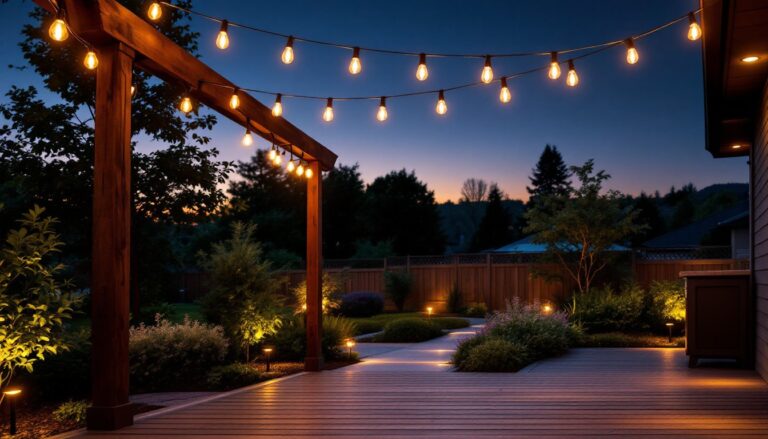
Once the sun sets, lighting transforms your pergola patio into an evening retreat. String lights (Edison-style or café lights) strung across the top beams create warm, inviting atmosphere, expect $50–$150 for a quality set rated for outdoor use. Install them on a 45-degree angle or gentle swag for visual interest. Plug them into a weatherproof outlet with a timer or smart plug so they come on automatically at dusk.
Recessed downlights built into the pergola frame provide functional, modern lighting without visible bulbs. Installation runs $200–$500 per light (materials and labor), so reserve this for high-impact areas or if you’re building the pergola new. Uplighting along the pergola’s posts creates silhouettes and drama, especially effective with vines and greenery overhead.
Better Homes & Gardens regularly features pergola décor ideas that layer ambient, task, and accent lighting for cohesive nighttime design. Candles in hurricane glasses, solar lanterns on nearby tables, and even a wall-mounted outdoor fan (which doubles as decorative hardware) add personality without complexity.
Keep décor functional. Weatherproof outdoor cushions in neutral or bold tones, a sturdy outdoor rug (natural fiber or polypropylene), and a weatherproof side table create comfort zones. Avoid overstuffing, a pergola’s strength is openness. A few well-chosen pieces (a hammock, a daybed, a dining set) feel intentional: too much clutter defeats the purpose of outdoor living.
DIY Installation Tips and Maintenance Guide
Before you dig, call 811 to have underground utilities marked, gas, electric, water, and telecom lines vary by property. Hitting a gas line ends the project (and more) instantly. Once the site is clear, lay out the footprint with stakes and string: measure diagonals to ensure square corners, they should be equal in length.
For a freestanding pergola, dig holes 24–36 inches deep and 12 inches in diameter (check local frost depth requirements, often 36–48 inches in cold climates). Use concrete mix (60-lb bags) rather than digging into soil, concrete footings prevent heave and rot. A 10×12-foot pergola needs four corner posts anchored in concrete: larger structures benefit from a mid-span post or two.
Attached pergolas bolt to the home’s ledger board using lag bolts or structural screws rated for outdoor use (stainless steel or coated). The ledger must bolt to house framing, not siding, this is non-negotiable structurally and often required by code. Space bolts 16 inches apart.
Materials checklist for a basic 10×12 pergola:
- Posts: Four 6×6 beams or four 4×4 posts with post caps
- Beams and slats: 2×6 or 2×8 lumber (or composite equivalent)
- Fasteners: Exterior-grade screws and bolts (stainless steel or exterior-rated)
- Concrete: 240–320 lbs (four 60-lb bags, roughly)
- Safety gear: work gloves, eye protection, dust mask if cutting, and ear protection for power tools
Maintenance depends on material. Wood needs inspection annually, check for splits, rot, and pest damage. Restain every 2–3 years (pressure-treated lumber lasts longer but requires upkeep). Composite requires occasional washing with mild soap and water. Aluminum needs minimal care beyond a rinse to keep it clean. All materials benefit from secure fasteners checked yearly, wind and settling can loosen bolts.