A well-decorated kitchen countertop does more than fill empty space, it reflects how you live and work in your most-used room. Kitchen countertop decor ideas range from purely functional to visually striking, and the sweet spot is often the intersection of both. Unlike trendy home decor that fades fast, the best countertop styling choices balance practicality with personality. Whether you’re staging before a sale or simply refreshing a tired kitchen, smart decor decisions can make your counters feel intentional and inviting without the cost of a full renovation. Here’s how to elevate your kitchen counters with approaches that stick around.
Table of Contents
ToggleKey Takeaways
- Kitchen countertop decor ideas work best when they balance practicality with personality, using only items you actually use daily.
- Introduce warmth and organic softness through wood elements and natural textures like wooden cutting boards, utensil holders, and linen towels.
- Living plants like pothos, spider plants, and herbs improve air quality and create visual focal points while requiring minimal maintenance.
- Display stylish kitchen tools and cookbooks openly to signal authenticity and create visual interest without needing a complete renovation.
- Layer different textures, finishes, and tones—such as smooth ceramic paired with woven materials—to add dimension and prevent visual monotony on your countertop.
- Proper lighting through under-cabinet LED strips or pendant lights transforms both function and appearance while making food prep safer and more inviting.
Keep It Minimal With Functional Accessories
Less is almost always more on a kitchen counter. Cluttered surfaces make even a clean kitchen feel chaotic, and they make meal prep harder. Start by removing everything that doesn’t earn its place.
Functional accessories include items you actually use daily: a cutting board, a knife block or magnetic strip, a utensil holder, and perhaps a salt and pepper mill. These items sit naturally on the counter because they’re in the workflow. The trick is choosing pieces with clean lines and materials that complement your countertop.
Consider a minimalist utensil caddy in stainless steel or ceramic. A single wooden cutting board in a warm tone adds texture without visual noise. Remodelista’s guide to kitchen countertop accessories demonstrates how five or six carefully chosen pieces create more impact than a dozen random items.
One counter habit many DIYers overlook: designate zones. Keep your coffee maker and mugs in one area, prep tools in another, and cooking oils near the stove. This organization makes the counter feel intentional and functional, not randomly decorated. Your countertop becomes a tool, not a showroom.
Add Warmth With Wood Elements and Natural Textures
Wood warms up a kitchen in ways that cold surfaces, granite, stainless steel, ceramic tile, cannot. Even if your countertop itself is sleek and modern, introducing wood brings organic softness to the space.
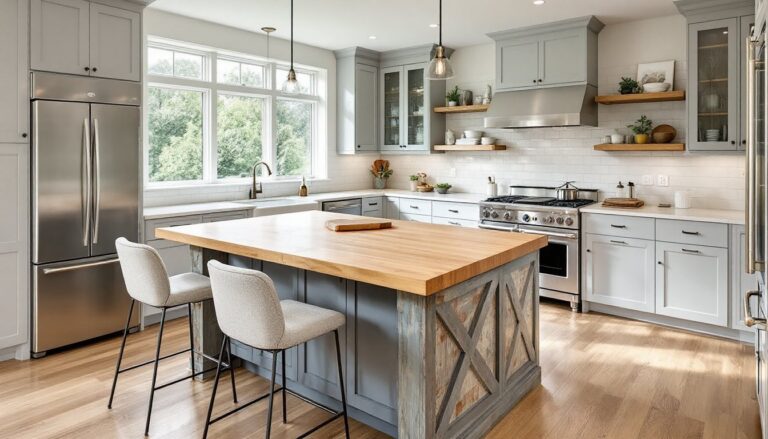
Small wooden items work best. A wooden cutting board (end-grain acacia or bamboo) is both functional and decorative. A wooden utensil holder or wooden tray for grouping salt, pepper, and oils creates visual hierarchy. Reclaimed or distressed wood pieces have more character than mass-produced options, and they tell a story.
Natural textures extend beyond wood. A linen kitchen towel draped over the handle of a drawer, a canvas-and-jute utensil holder, or a raffia place mat add tactile warmth. These materials pair well with stainless steel appliances and help soften industrial or cold countertop finishes.
If your kitchen feels sterile or dated, wood and natural textures are the quickest fix. They require no installation, no permits, and minimal investment. Swap them out seasonally if you want: there’s no commitment. The warmth they bring is immediate and noticeable.
Incorporate Greenery and Fresh Plants
Living plants on a kitchen counter serve dual purposes: they improve air quality and create a visual focal point. The key is choosing plants that tolerate kitchen conditions, humidity, temperature fluctuations, and sometimes low light.
Pothos, spider plants, and succulents are forgiving choices for busy kitchens. Pothos thrives in indirect light and doesn’t need constant watering, making it ideal above a counter away from a south-facing window. Succulents (echeveria, jade plant) work on sunny windowsills and require minimal maintenance. Herbs, basil, parsley, chives, serve double duty as decor and ingredients.
Containers matter as much as the plant. A ceramic pot in white, terracotta, or matte black ties into kitchen aesthetics. A wooden planter echoes the wood-element principle. Avoid plastic pots: they cheapen the look. For renters or those avoiding countertop clutter, a single small succulent in a stone pot near the sink creates visual interest without overwhelming space.
One practical note: water and light are essential. A plant dying on your counter looks worse than no plant at all. Before adding greenery, honestly assess your countertop’s light exposure and your willingness to water occasionally. A thriving plant adds life: a struggling one adds guilt.
Display Cookbooks and Stylish Kitchen Tools
Cookbooks are decor when chosen thoughtfully. Stacking a few favorites vertically, or propping one open with a cookbook stand, adds personality and functionality. Choose cookbooks with attractive spines or covers, ones you actually use and reference. A single cookbook you love beats five dusty volumes you never open.
Stylish kitchen tools can be on display instead of hidden in drawers. A marble or ceramic utensil holder with your everyday tools, wooden spoons, whisks, spatulas, becomes a design element. A vintage scale for measuring flour, a stainless steel measuring cup set on an open shelf, or a rolling pin propped nearby suggest a working kitchen, not a staged one.
Homify’s kitchen countertop ideas show how open storage of attractive cookware, a copper-bottomed pan, a cast-iron skillet, or a Dutch oven, doubles as decor when the finishes are polished and intentional.
The principle here is visibility = honesty. If you display cookbooks and tools, you signal that cooking matters in this kitchen. Visitors can tell the difference between a kitchen where someone actually cooks and one where items are arranged for show. Authenticity reads as more stylish than perfection every time.
Lighting as Both Function and Decor
Countertop lighting transforms both the function and appearance of your kitchen. Under-cabinet LED strips illuminate your work surface while adding a modern touch. Pendant lights hung above a kitchen island or peninsula create visual drama and task lighting in one stroke.
Choose lighting fixtures that match your style. Industrial pendant lights with metal shades suit a modern kitchen: glass or frosted shades work in transitional spaces: brass or warm-metal fixtures add elegance. The color temperature matters too: warm white (2700K) feels inviting: cool white (4000K) is more functional for cooking and prepping.
If you lack natural light or your counters sit in shadow, proper lighting becomes non-negotiable. A well-lit counter is safer (better visibility for knife work) and more inviting. Dim, shadowy counters feel cramped and neglected. This is where function truly drives decor decisions.
For renters, adhesive LED tape under cabinets is reversible and effective. For homeowners planning permanent upgrades, hardwired under-cabinet lighting requires basic electrical work, running wires through cabinetry and connecting to a power source. If you’re uncomfortable with electrical, bring in a licensed electrician. It’s worth the cost for safety and quality. Lighting is one of those decor elements that feels custom-built rather than temporary.
Mix and Match Textures for Visual Interest
A countertop with one material or finish feels flat, even if it’s beautiful. Layering textures creates dimension and prevents visual monotony. Your countertop itself is one texture (stone, laminate, wood, tile), but what you place on it should introduce contrast.
Pair smooth surfaces with rough ones: a sleek ceramic container next to a woven place mat, or a glass measuring cup beside a linen towel. Mix matte and glossy finishes: a matte ceramic utensil holder near a shiny stainless steel soap dispenser. Combine warm and cool tones: natural wood cutting board on a cool gray countertop, or brass plant pots on a warm butcher-block counter.
The Kitchn offers endless inspiration for kitchen organization and design that balances texture and function. Successful countertop styling feels collected over time, not purchased as a matching set. That mix-and-match approach is what separates a designed kitchen from a decorated one.
One final principle: edit regularly. A countertop that looks great in January might feel cluttered by April. Remove items you’re no longer using, dust surfaces you always skip, and swap in seasonal elements if you want. A countertop is not static. The best kitchens evolve as you use them.
Conclusion
Kitchen countertop decor in 2026 favors authenticity and practicality over trends. The most stylish counters are ones that work hard and feel intentional. Start with items you genuinely use, add warmth through natural materials, and let your kitchen’s function drive its form. Small changes, removing clutter, introducing a plant, upgrading lighting, shift a tired counter into one you’ll actually enjoy working on. Your kitchen countertop doesn’t need a complete overhaul to feel fresh. It needs thoughtfulness and a willingness to let it be real.