A kitchen countertop refresh doesn’t have to drain your savings account. Whether you’re replacing worn surfaces or updating an older kitchen, smart material choices can give you the look you want without the luxury price tag. This guide walks through five proven budget-friendly kitchen countertop ideas that homeowners are choosing right now, from laminate and butcher block to tile and concrete. You’ll learn what each option costs, how to install or maintain it, and where it fits best in your kitchen. By the end, you’ll have a clear path to a countertop upgrade that fits your budget and your style.
Table of Contents
ToggleKey Takeaways
- Budget-friendly kitchen countertop ideas like laminate ($10–$30 per linear foot) and butcher block ($25–$50 per linear foot) deliver style without premium pricing.
- Laminate countertops offer straightforward installation and 10–15 years of durability, making them ideal for renters and quick kitchen updates.
- Butcher block requires regular oiling and moisture management but rewards homeowners with natural warmth and character that improves with age.
- Tile countertops provide unlimited design flexibility at $5–$20 per square foot, with the advantage that individual damaged tiles replace easily.
- Concrete countertops ($30–$65 per linear foot) deliver industrial-modern aesthetics with customization options, though they need annual sealing to resist stains.
- Refinishing existing laminate or tile surfaces costs just $100–$500 and extends countertop life 5–10 years before committing to full replacement.
Laminate Countertops: The Affordable Classic
Laminate remains the most budget-conscious option for kitchen countertops, typically running $10–$30 per linear foot installed. Modern laminates look nothing like the plastic versions from decades past, they now mimic wood grain, concrete, and stone convincingly. The material bonds a decorative paper layer to a plywood base, making it durable for everyday kitchen use.
The biggest advantage? Installation is straightforward. A laminate countertop sits on top of existing cabinets, held down with adhesive and fasteners underneath. You won’t need underlayment or a second pair of hands for a standard straight run. Seams are the weak point, water can seep underneath if they’re not sealed properly, so apply silicone caulk along all seams and edges on first installation.
Laminate does have limits. It can’t handle direct heat from a hot pan (use a trivet), and sharp impacts or knife cuts can gouge the surface. Deep scratches won’t repair as cleanly as wood. But for the price, laminate absorbs daily kitchen punishment and looks fresh for 10–15 years with basic care. If you’re renting, moving soon, or testing a kitchen layout before committing to permanent work, laminate gets the job done.
Butcher Block: Warm Wood on a Budget
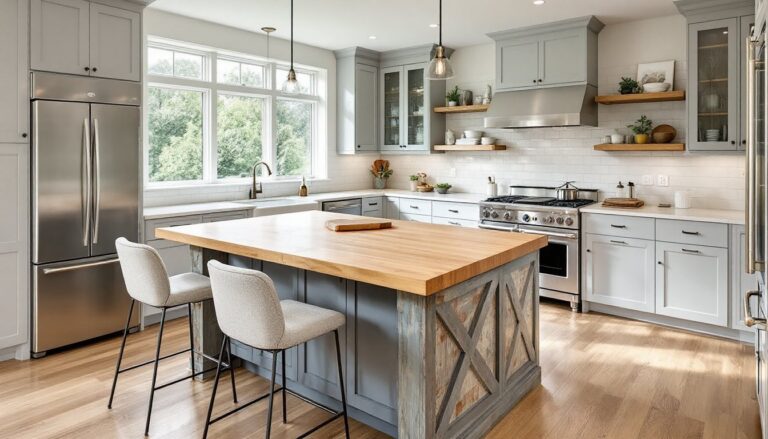
Butcher block, solid wood strips glued and pressed into planks, brings warmth and character that laminate can’t match. Prices range from $25–$50 per linear foot for mid-grade hardwoods like oak or maple, making it surprisingly affordable compared to stone. The wood develops a rich patina over time, and minor scratches sand out easily.
The trade-off: butcher block demands regular maintenance. You’ll oil it every few weeks (or monthly if heavily used) with food-safe mineral oil or a dedicated butcher block conditioner to prevent drying and cracking. Water is the enemy, standing moisture invites rot and mold. Wipe spills immediately, and never install butcher block next to a sink without proper slope and ventilation. It’s not recommended in steamy kitchens or directly behind a range.
If you’re willing to put in the upkeep, butcher block is a rewarding upgrade. The wood breathes, ages beautifully, and feels nothing like plastic. Many DIYers prefer it because minor damage, a stain, a small burn mark, becomes part of the surface character rather than a visible flaw. Position it in lower-traffic zones (a kitchen island or prep area) rather than high-splash areas for best results.
Tile Countertops: Endless Design Possibilities
Tile offers flexibility that other budget options can’t touch. At $5–$20 per square foot for materials, plus grout, you can mix and match colors and finishes for a custom look. A 4-inch by 4-inch ceramic tile might cost $0.50 per piece, while a handmade artisan tile could run $3–$5. The total cost depends on tile size, finish, and complexity of the layout.
Installation requires a solid, level substrate (often a layer of cement backer board glued and screwed to plywood). Spread thinset mortar with a notched trowel, set tiles, then grout the joints after 24 hours. For a homeowner, a small countertop (like an island) is manageable: a full kitchen might justify hiring help. Grout is porous and stains easily, seal it after curing, and re-seal annually if you’re cooking heavily.
Tile’s big advantage is durability and repairability. A cracked tile pulls out and replaces in minutes. The downside: grout lines collect debris, and tiles are harder to keep seamlessly clean than solid surfaces.
Ceramic vs. Porcelain: What’s the Difference?
Ceramic tile is softer and more porous, making it easier to cut and install but more prone to staining. Porcelain is fired at higher temperatures, creating a denser, less porous surface that resists moisture and stains better. For kitchen countertops, porcelain is the safer choice, even though it costs slightly more. Both work: porcelain just needs less maintenance. Glazed finishes are easier to clean than matte, but they can be slippery when wet, keep a kitchen towel handy.
Concrete Countertops: Industrial Charm Without the Premium Price
Concrete has shed its garage-floor image and become a hip countertop choice. Poured-in-place concrete costs $40–$65 per linear foot, while precast concrete slabs run $30–$50. Both offer a minimalist aesthetic and customization (you can embed glass, stones, or stain the surface).
The material is tough, concrete handles heat, impacts, and daily use well. But it’s porous. Acidic foods (lemon juice, vinegar, wine) and water etch the surface if not sealed. A quality concrete sealer applied every 1–2 years keeps stains at bay. Hairline cracks can develop naturally as concrete cures and shifts: they’re cosmetic but part of the material’s character.
If you’re pouring in-place, the project requires a custom mold, mixing, and curing time (usually 7 days before use). Precast slabs bypass on-site mess but need proper support and sealing on arrival. Polishing and staining add cost but create a showstopper finish. For the DIY crowd, concrete isn’t as beginner-friendly as laminate, but it’s achievable with patience and attention to detail. The industrial-modern vibe appeals to homeowners who want something different without paying premium marble prices.
Refinishing Existing Countertops: The DIY Solution
Before replacing, consider refreshing what you have. Laminate and tile countertops can be refinished at a fraction of replacement cost, sometimes as little as $100–$500 in materials.
For laminate, a countertop refinishing kit (around $30–$80) includes primer, paint, and sealant designed to bond to the plastic surface. Sand the laminate lightly with 120-grit sandpaper to dull the gloss, clean thoroughly, apply primer, then paint with two thin coats. The finish won’t match brand-new factory laminate, but it refreshes the look and extends life another 5–10 years.
Tile countertops respond well to grout color change. Remove old grout with a rotary tool or grout saw, then apply new grout in a contrasting or coordinating shade. It’s tedious but transforms the visual impact for under $50. You can also paint or seal the tile itself if the color feels dated.
Refinishing is honest work, it won’t feel like a new countertop, but it breathes life into a tired surface without the cost or disruption of replacement. Many homeowners use refinishing as a holding pattern before saving for a bigger kitchen remodel. Design inspiration sites like Apartment Therapy and The Kitchn showcase creative refinishing projects that prove you don’t always need to start from scratch. Combined with other budget-conscious upgrades, refinishing can be part of a larger home renovation ideas on a budget strategy.
Conclusion
Budget countertops don’t mean compromising on style or durability. Laminate suits renters and quick updates: butcher block rewards hands-on maintenance: tile offers endless design freedom: concrete delivers industrial flair: and refinishing stretches your current surfaces further. Start by assessing your kitchen’s use (heat exposure, moisture, foot traffic) and your willingness to maintain the surface. Measure twice, plan the layout, and don’t skip surface prep. With the right choice and honest care, a budget countertop will serve your kitchen well for years to come.